


 88 / 116

Flybe’s World / Our Fleet
88
/
Flight Time
/
JULY 2019
Ourfleet
FACTS ABOUT THE FLYBE AIRCRAFT – AND YOUR QUESTIONS ANSWERED
WHAT IS A FRANCHISE?
Not on one of the aircraft above? You’ll be travelling with one of our franchise partners. A franchise is where another
operator is allowed to fly their planes under the Flybe brand, with our agreement. Your journey should look and feel
like any other Flybe flight. Although technically a different company is operating it, these franchise airlines closely
follow our customer service and brand guidelines, so you enjoy a very similar experience.
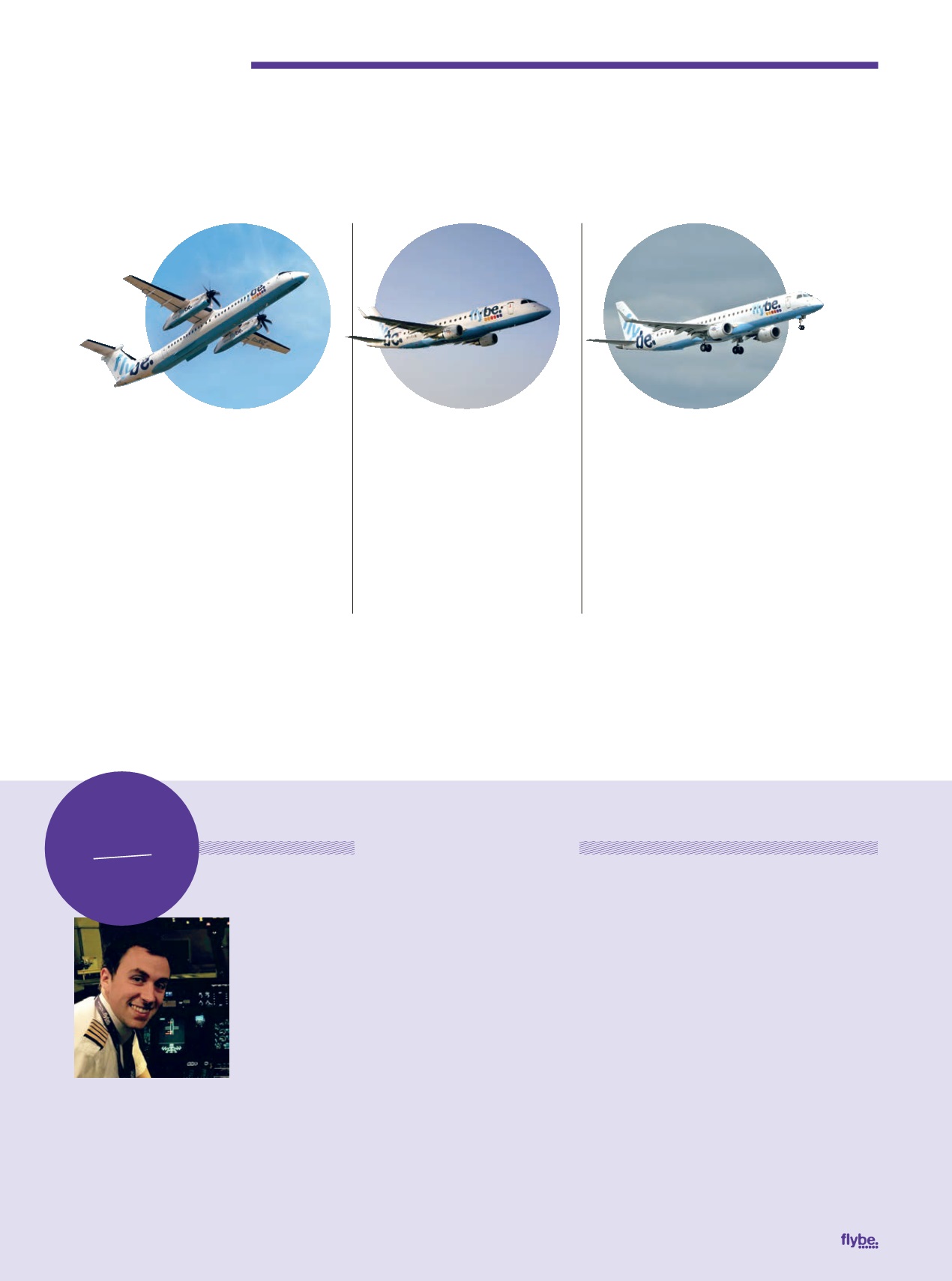
BOMBARDIER DASHQ400
Pilots/Cabin Crew:
2 Pilots, 2 Cabin Crew
Seats:
78
Engine Type:
Pratt & Whitney Canada PW150A
Weight:
29 tonnes
Max Altitude:
25,000 ft
Max Speed:
410 mph
Range:
1,300 miles
EMBRAER E175
Pilots/Cabin Crew:
2 Pilots, 2 Cabin Crew
Seats:
88
Engine Type:
General Electric CF34-8E
Weight:
38 tonnes
Max Altitude:
41,000 ft
Max Speed:
550 mph
Range:
2,000 miles
EMBRAER E195
Pilots/Cabin Crew:
2 Pilots, 3 Cabin Crew
Seats:
118
Engine Type:
General Electric CF34-10E
Weight:
51 tonnes
Max Altitude:
41,000 ft
Max Speed:
550 mph
Range:
1,900 miles
How does air conditioning
work on an aeroplane?
The conditioning system is
powered by the aircraft’s
engines. On the ground, we
normally use an APU (auxiliary
power unit), which is a small
engine in the tail of the
aeroplane to push cool or
warm air into the cabin.
Sometimes when we taxi
out or take off, we have to
temporarily reduce the volume
of air coming from this system
CAPTAIN CHR IS JONES ,
OPERATIONAL SERVICES
MANAGER , ANSWERS
YOUR QUESTIONS
in order to give the aircraft
engines optimum take-off
power. As soon as we’re in the
air, the volume can return to
higher levels.
Why do we keep stopping
when we taxi or before we
take off?
When we taxi on the ground,
just like in flight, we follow
instructions from air-traffic
control based at the airport.
They have the bigger picture
of what else is moving around
the airport so may hold us
to allow other aircraft to
pass. Even if we’re on the
runway and ready to go, an
aeroplane that has just taken
off before us may need to
be a certain amount of time
or distance ahead in order
to ensure we’re properly
separated. This is often why
we occasionally sit on the
runway waiting for our take-
off clearance.
Ask thepilot
GOT A
QUESTION FOR
ONE OF OUR
PILOTS?
Email:
as
kourpilots@ flybe.com