


 79 / 116

JULY 2019
/
Flight Time
/
79
Business Focus
ver since the first episode
aired in 2011,
Game of Thrones
has captivated audiences
around the world. We’ve
watched leaders rise and fall (often in quite
spectacular fashion) in their quest to take
the Iron Throne, and we’ve seen beloved
and despised characters plot, scheme and
fight for power through very different
leadership strategies.
So, avoiding any major plot spoilers
for anyone who hasn’t yet watched it,
what can we learn about leadership
from the Seven Kingdoms of Westeros?
We asked five business experts to pick
out the lessons that we should (and
shouldn’t!) take away from their favourite
characters…
E
THE HIT SERIES MAY HAVE COME TO
AN END, BUT THERE’S STILL PLENTY
WE CAN LEARN FROM THE CAST OF
UNFORGETTABLE CHARACTERS, AS
BUSINESS LEADERS EXPLAIN
LEADERSHIP
LESSONS
FROM
GAME
OF
THRONES
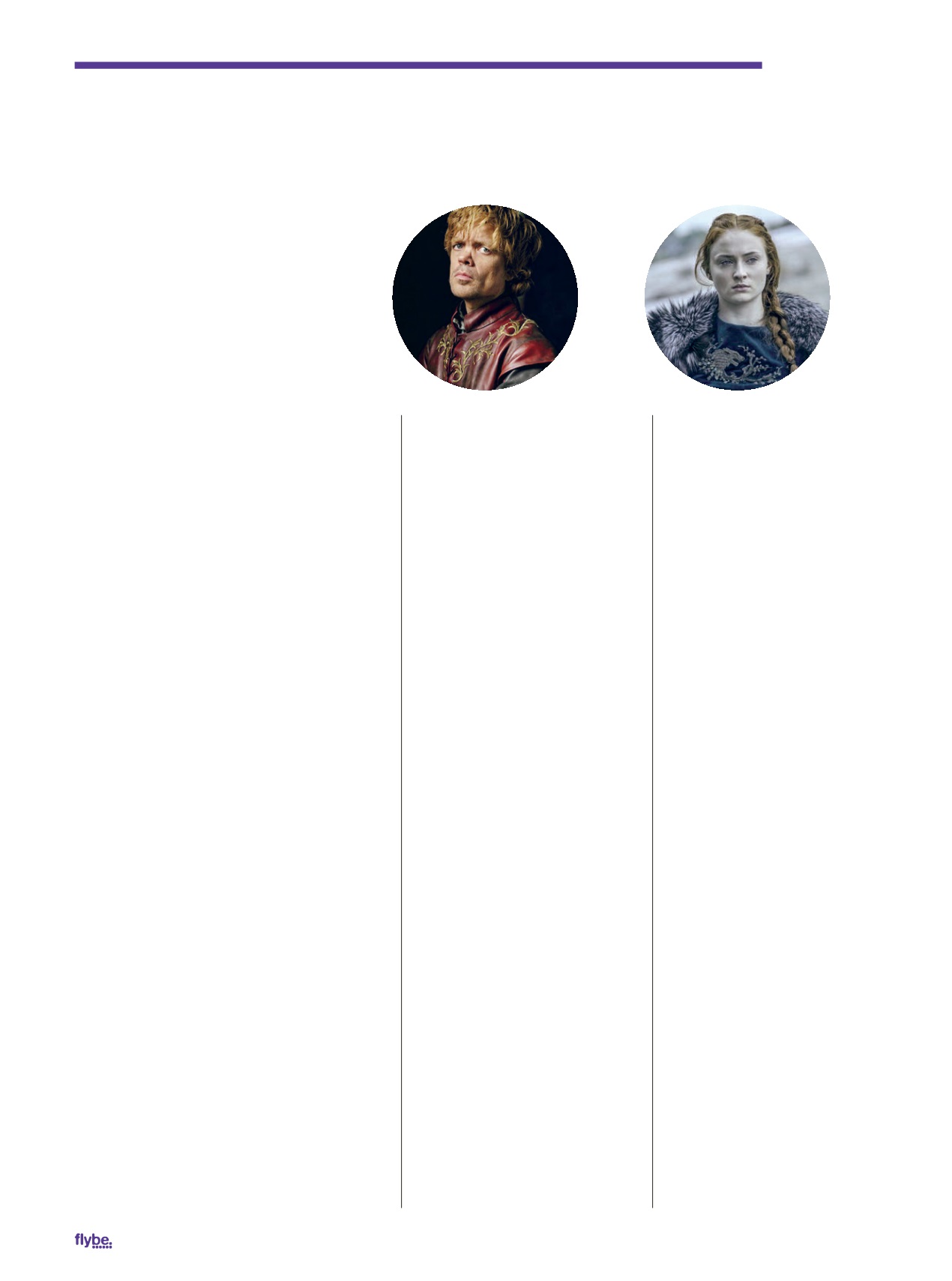
TYRION LANNISTER
“Tyrion Lannister embodies three virtues
every aspiring leader should seek to
cultivate: wisdom, wit and the ability to
find strength in his weaknesses.
“Let’s start with the wisdom: he
understands that to overcome prejudice,
it is first necessary to understand how and
why that prejudice exists. And to accept
that injustice is an unavoidable part of life,
but what we can avoid is squandering our
time and energy moaning about it.
“He’s a dwarf in a world inhabited
by giants. Unjustly accused. Abducted.
Demoted. Mocked. Framed for murder.
But he’s wise enough to focus on the many
advantages life has presented to him:
ready access to stack-loads of cash, support
from international power brokers and an
obvious point of difference from the usual
leadership candidates.
“And then there’s the wit: who can’t
help but like someone with an archive of
quotes that would give Oscar Wilde a run
for his money?
“His defining characteristic, though,
is his ability to tread that fine line that
divides being weird and being remarkable.
Tyrion’s weaknesses endear him to others
because they aren’t used as excuses for
failure. They make him different and
interesting because he’s over himself
enough to sport them in public and show
the world that being diminutive doesn’t
make him small – it’s part of what makes
him great. And I’m not just saying that
because I’m under five foot eight.”
Nick Liddell is director of brand consultancy
The Clearing, and co-author of new book,
Wild Thinking: 25 Unconventional Ideas
to Grow Your Brand and Your Business,
published by Kogan Page.
SANSA STARK
“Sansa, raised to be a lady (who suffered
the innocent loss of her direwolf by that
very name), had everything she believed
in torn brutally away from her at 13. She
has suffered – although in a dramatically-
theatrical way – what many women face.
Wanting to ‘be feminine’, deferring to
others out of a sense of duty, seeking a
quiet life, is criticised – even by women.
Why is she not raising dragons, or
learning swordsmanship, or seducing her
way to the top in a toxic world?
“To escape King’s Landing, she aligned
with unlikely sources who showed her
sweet disposition kindness. To return to
Winterfell she played the game – without
losing sight of her integrity.
“She built her character from those
she admired without turning persecutor
or victim. She stood up as a determined
diplomat for The North before Daenerys
and Jon Snow. She did not rush into
battle, but she was prepared to ‘stick
them with the pointy end’ when the need
arose. Sansa has grown – and without
an advisor or protector (eg. Jorah, The
Hound, Jaime). She’s thought critically,
trusted her judgment, accepted help when
required. She wouldn’t ignore the bells
of surrender because she is a lady – Lady
Sansa of Winterfell, and doing a fine job of
leadership.
“It is Sansa’s resilience, innate ability to
learn – to adapt while retaining integrity
and grace, that is her strength. And in
a world where the fight is not always
rewarded, let us not underestimate
Sansa Stark.”
Dr Audrey Tang is a chartered psychologist
and the author o
f The Leader’s Guide to
Mindfulness,
published by FT Publishing.