


 75 / 132

FEBRUARY
75
“A drop in training activity, combined with the existing shortfall of leadership talent is creating a
‘perfect storm’ for UK employers...”
BUSINESS
INTEL TIME
What was the last thing you said when you
left the office? What mood did you leave
colleagues in? Did you rush out the door,
with a raft of last-minute questions, or did
everyone understand that you trusted them
to get on with the job?
Can’t remember? This matters more
than you might think.
It’s no secret that the UK faces a
substantial and growing productivity
problem, and a chronic shortage of leadership
talent. There simply aren’t enough great
people with the right skills around; our
research found that just a third (34 per cent)
of employers feel confident in their supply of
leadership for the next three to five years.
In the midst of some of the biggest
upheavals in corporate memory – Brexit,
digital transformation – businesses don’t
just need people who can perform their day
job to a high standard, but people who can
help their organisation adapt and change.
Yet despite the critical need to upskill staff,
with businesses facing ongoing uncertainty
and demands for cost savings, training and
development is often one of the first areas
to be cut back.
The consequences could be problematic.
A drop in training activity, combined with
the existing shortfall of leadership talent is
creating a ‘perfect storm’ for UK
employers. In the absence of other learning
methods, employees are looking primarily
to those around them for guidance on how
to act in the workplace, imitating the
leadership traits of their colleagues (74 per
cent of UK professionals told us they have
actively emulated attributes of their
co-workers).
But how can organisations make sure the
John Yates
explains why training and development are vital for spreading
the right attributes and skills throughout your company
CONTAGIOUS LEADERSHIP:
Making sure only the best leadership
attributes catch on at your workplace
right attitudes and skills are being spread
throughout their business?
Why leadership matters
The way today’s organisations are
structured is changing. Rigidly-hierarchical
businesses are rapidly disappearing.
Instead, people are getting used to flatter
structures where they have a say, and gain
recognition for their work.
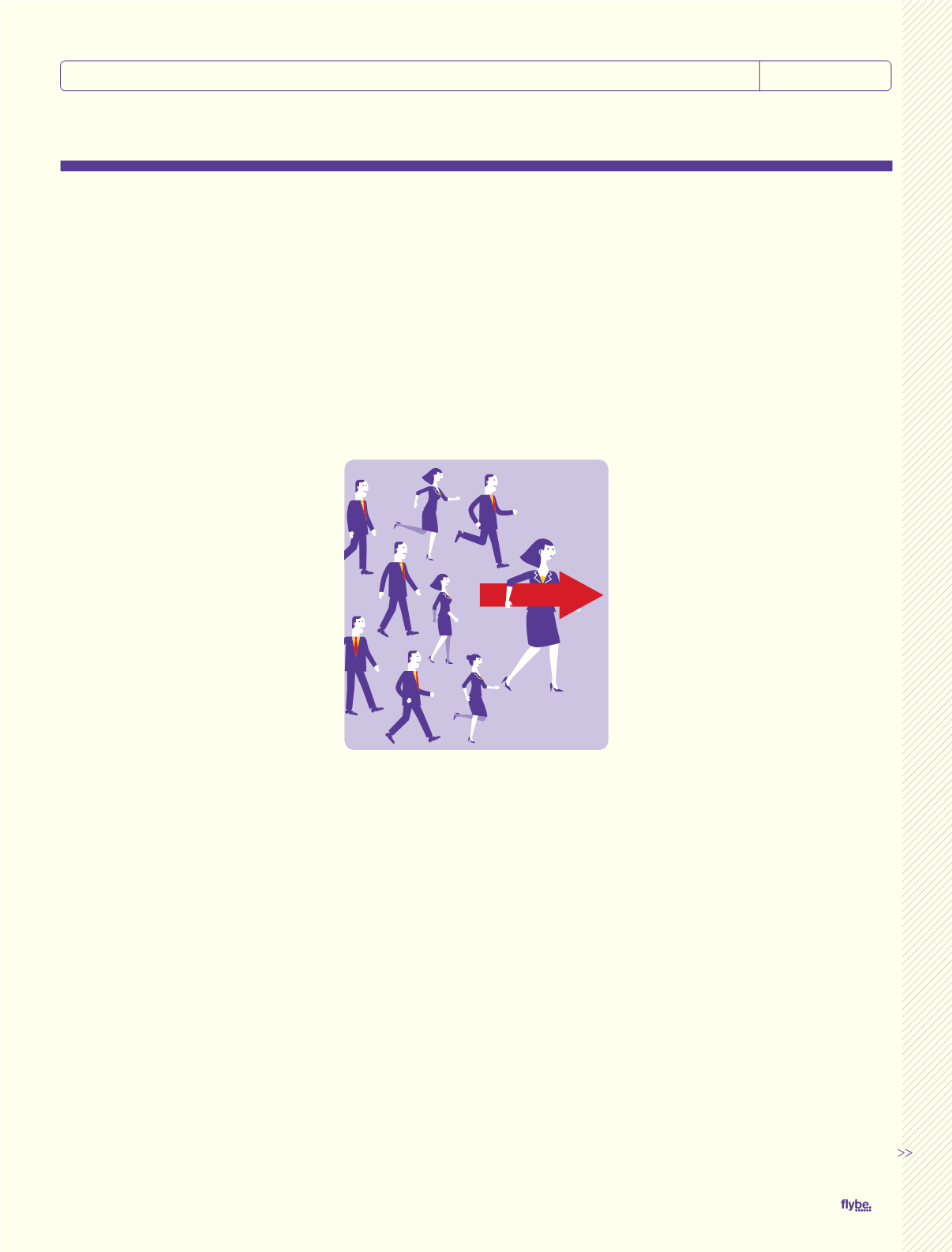
This means leadership now spans across all
levels of a business. Whether they operate at
the frontline or in the boardroom, everyone
has decision-making responsibilities and a
direct impact on the bottom line. It is
therefore essential that businesses learn to
develop great leadership skills in all their
staff, from apprentices through to the CEO.
But current development journeys do not
tend to reflect modern organisational
structures. Rather than giving people the
skills they need to manage a team effectively,
handle responsibility, coach colleagues and
organise work from the get-go, we typically
wait until people are elevated into their first
‘management’ role. This is a mistake.
Stepping up for the first time and taking
responsibility for the workloads and
wellbeing of others is exactly the wrong time
to start developing leadership skills. There is
a danger that in the struggle to keep up,
individuals will form harmful habits which
may well last a professional lifetime. And in
turn, these could be passed on to others,
continuing the cycle of poor management.
So what do professionals do when they
are thrown in at the leadership deep end
without a life jacket?
The dangers of contagious leadership
Our latest research revealed that leadership
skills, both good and bad, are spread
contagiously through a business. The
behaviours professionals exhibit – what they
say, do, and how they act – are all copied by
the people around them.
And some of the most contagious traits are
the most critical to get right, including
communication, copied by a fifth (18 per
cent) of workers, problem solving (9 per
cent), and customer service (10 per cent).
Motivations for replicating the behaviour
of colleagues vary widely, and some reasons
are more aligned with achieving
organisational success than others. For
example, three quarters (74 per cent) of
people who copy the humour of their
colleagues think it will help them work better
with colleagues, a third (29 per cent) who
emulate delegation and organisation skills do
so to get promoted or receive a pay rise, while
41 per cent of people who imitate the