


 36 / 116

36
/
Flight Time
/
NOVEMBER 2018
Real Life
JOHN PR I TCHARD ’ S
EYEWEAR COMPANY IS
PRODUCING ST YLISH,
AFFORDABLE
SUNGLASSES THAT
ARE FUNDING EYE
CARE TO AFR ICAN
COMMUNI T IES ,
HELP ING TO
ALLEVIATE POVERT Y
ala is the brainchild and long-held
dream of founder John Pritchard.
Prior to setting up the Brighton-
based eyewear brand, John’s career
had been in digital media. However, he had
always harboured a desire to do something more
purposeful with his life than simply moving
advertising budgets around. Pala was the antidote,
a business that truly gave back and would make a
genuine difference to people’s lives.
As a glasses wearer himself and inspired by
other like-minded mission-led brands, John had
become familiar with the problems surrounding
the lack of eye care in low-income countries,
notably in Africa, a continent he had visited on
several occasions.
“We take spectacles for granted, but more
than 10 per cent of the world’s population is
unable to access eye care,” says John. “A pair
of glasses is an invaluable economic tool,
providing empowerment for the wearer. They
enable reading, learning and access to
better education, along with improved
job prospects, whether that be to operate
machinery or simply to thread a needle.”
Here Pala had found its cause. It would
act as a vehicle to funding eye-care projects
in Africa – it would be at the very heart of
the business model.
Says John: “Through the sale of our
eyewear, we provide grants directly to
eye-care projects in Africa. This might be a
new Vision Centre, dispensary, equipment
or supporting an outreach programme in a
rural community.
“From the funding of these projects we
can calculate a cost per patient helped and it
P
is that cost that customers provide through buying
our eyewear. This is how we square our proposition
that buying a pair of sunglasses equates to a pair of
spectacles for a person who needs them.”
The name Pala comes from the impala
antelope. Renowned for their superb eyesight,
their main survival tool, this native African
species reinforces the connection to the brand.
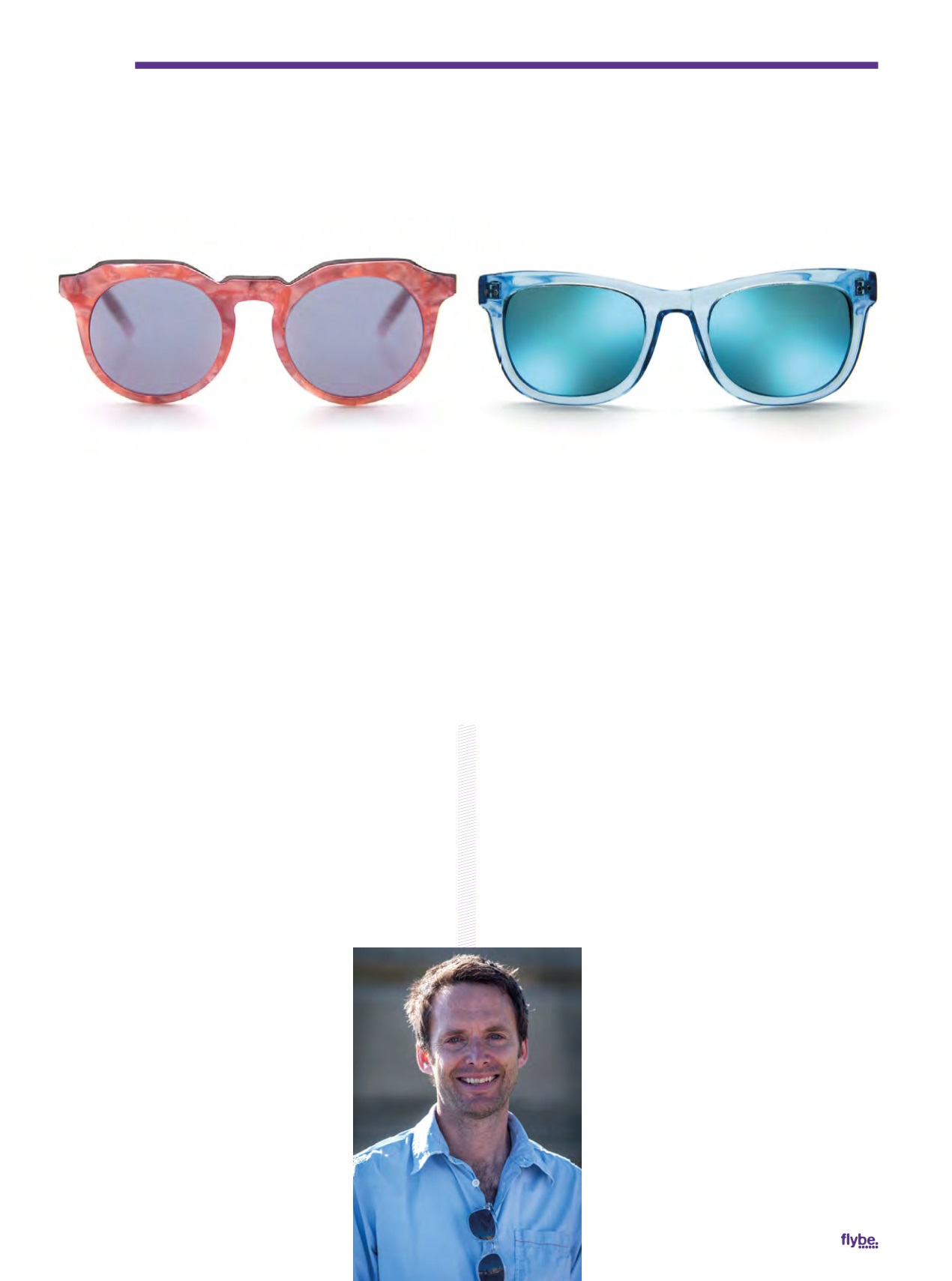
The Pala range is targeted at both men and
women. Styles are a mixture of classics and
seasonal trends and made from high-quality
materials, built to last.
John also felt the sunglasses cases needed to
tell a story, too. Following a chance meeting with
Jib Hagan fromWorthing, who runs an NGO in
Ghana working with the talented basket weavers
of Bolgatanga, they worked together on creating
the cases from recycled plastic waste.
Access to more traditional straw material was
limited to just one season in terms of availability
and, coupled with the endemic issue of plastic
waste, this was a win-win solution for
both planet and weaver alike. Year-round
production, recycling waste destined
for landfill, creating training and jobs,
and protection for the sunglasses – the
handmade cases that come with every pair
of Pala sunglasses are unique. Each one
can be traced back to one of three rural
communities that produce them by the
colour stripe that is woven into the case.
Says John: “As we grow, we will innovate
and look to achieve even more and continue
to help create change where it is needed
most. It’s an exciting journey and I love
every second of it.”
www.palaeyewear.comVision
for
the
future