


 17 / 124

JUNE
17
rhino was completely panicking. Then the
industry got confident again as people
began buying MP3s in droves. Now it’s in a
much, much healthier place all round. I was
lucky that I was able to start my own label,
so I didn’t have to rejoin it. Only when I’m
touring, for instance, do I meet people
from the industry. The same people are still
working in it and most have stopped taking
drugs now, thank goodness. They thought
that the creativity would go if they stopped
taking drugs but it’s the opposite. You just
have to get real.
What’s the story behind your latest
album,
Woodland Echoes
?
After being on MySpace and sharing music,
around 2008 it was suggested that I do an
album. I felt ready and thought, this will take
a month. I started the process but not being
commissioned, I didn’t have the finance to
go into a studio with a band. So this album
was done on the computer in the spare
room, other people’s spare rooms… I was
working with musicians then going back to
my spare room and editing, which you can
do with Logic Audio. I think editing was a
vital creative part of the album, a creative
tool, like another instrument or another
band member. And I had the space and time
to actually chip away at it. Because I didn’t
have the pressures, it was recorded over a
decade to get the whole story right, which
is why
Woodland Echoes
has different styles.
It’s the story of the last 10 years. It uses
mixed media because it was recorded at
home and I often recorded with the window
open. On one track,
Beautiful Morning
, you
have a real dawn chorus, not something
from the sound-effects man. It was recorded
by sticking a microphone out of the window
And it’s similar with an album. You have to
put your all into it and make it work, and it
has to be the best you can do.
So, thinking about it, the albums are the
highlight. The stuff that comes after them,
the promotion, certainly isn’t a highlight for
me. I love creating music and I like talking
about it – I enjoy communication – but it’s
the other side, the music business side, that
I don’t enjoy because the music business
is a stressed beast. If it was in the wild
it would be something like a rhino with
a dodgy hoof. Something’s gone wrong
there for me. It’s irritated and angry and
charging around the place and you don’t
know why. You think, for God’s sake, help
that rhino, it doesn’t need to be so stressed.
Every time I go into the safari park of
the music business, it’s like, wow, this
is not reality, it’s not real. There’s a
bunch of stressed people, it’s intense.
They’re always rushing; they need
to go here, go there,
now
! It’s so
unnecessary. That has nothing to
do with writing an album at all.
I’m pretty done with the music
business, and it doesn’t seem to
have changed over the years.
How has your music changed
over the years?
It’s definitely evolved, although it’s hard to
know how because it’s almost like you’re not
steering it sometimes. It’s a bit like a writer
sitting down to write a book and ending up
writing a short story, or even a poem.
Where does the decision come from
to write an album? Is it purely down
to inspiration?
In the early days, it was about being
commissioned. You had to write albums
because they were part of your career.
Then the music business changed at
the end of the ’90s and it has kept on
changing. I remember at the end of the
’90s I was with a label called Creation,
which was very guitar-band orientated, but
the climate changed and suddenly it was all
about dance music. It seemed to be all over
for guitar bands. Even Creation founder
Alan McGee said guitar bands were on the
way out – and he had Oasis and Primal
Scream on his books! Some people were
kept on by Sony, some weren’t – I wasn’t.
So in the early 2000s I remember thinking,
I’m not going to be commissioned so I’ll
just play live and not make albums. Then
the internet changed everything. MySpace
came out and you could make music
and share it directly with your audience.
Laptops were getting better. Someone had
invented Logic Audio, a virtual recording
studio for your laptop, so I could sit at the
kitchen table and make music.
My son Oliver was growing up and he
was getting into sound recording so he
set me up on MySpace. We went to music
shops to buy microphones, hired a piano
and that afternoon I was sharing music
directly with people. As an artist, I was
completely fulfilled. I didn’t mind if there
were sales involved or anything. In fact, It
was liberating. What better job could you
have? It’s like being an artist, painting a
picture in the morning and by 5.30 it’s in
the gallery.
As that decade went on, albums began
to come back. For most of the 2000s,
the album had been on the wane; vinyl
and CDs had disappeared, and the music
business was going into meltdown. The
MY TIME
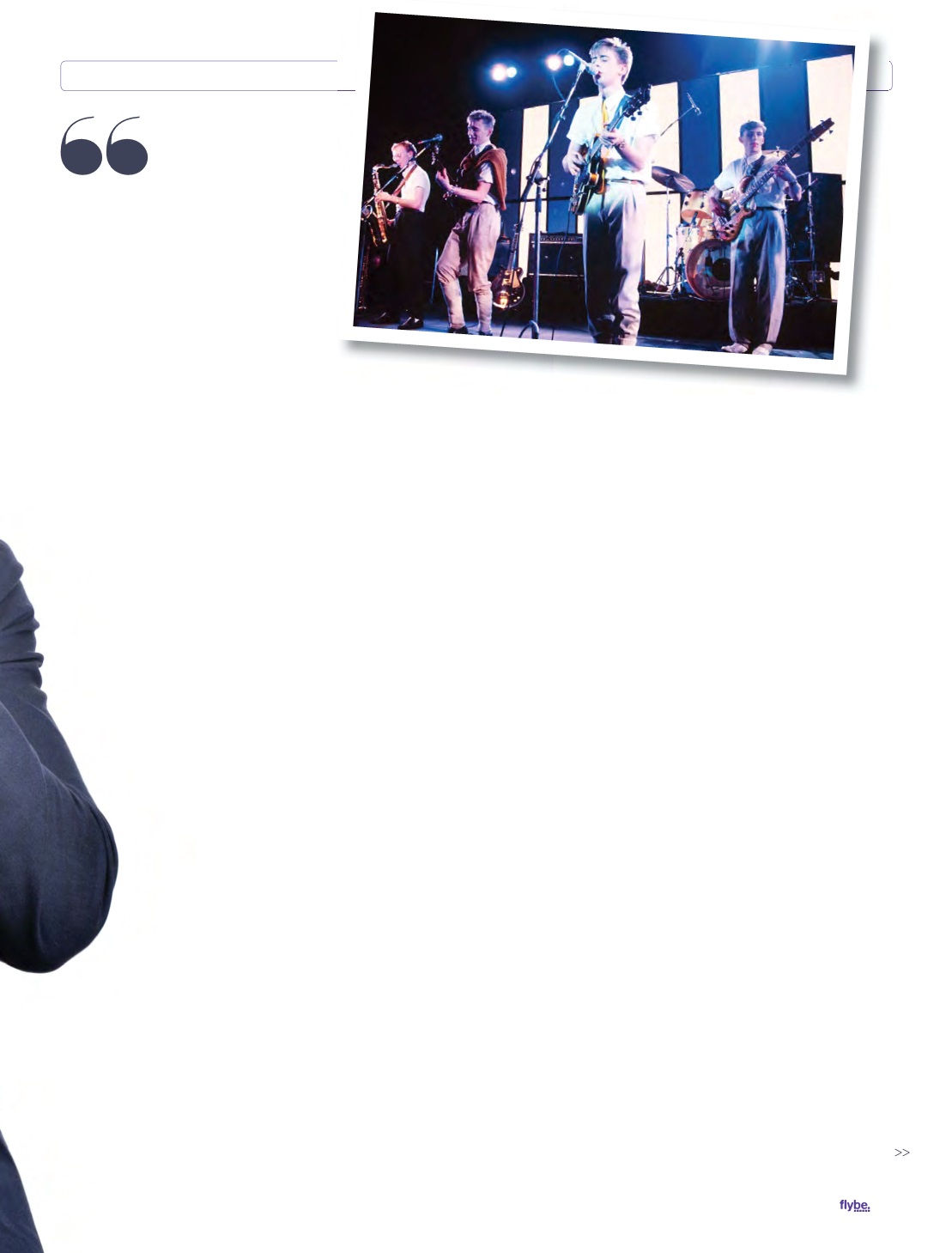
I think with
a band,
the best time is just
before you hit it big.
That anticipation of
what might happen
TONY NUTLEY/REX/Shutterstock